
Kaiwa-Tech
Educational robotics kits and components for the maker community in Quilmes. Where it all began.
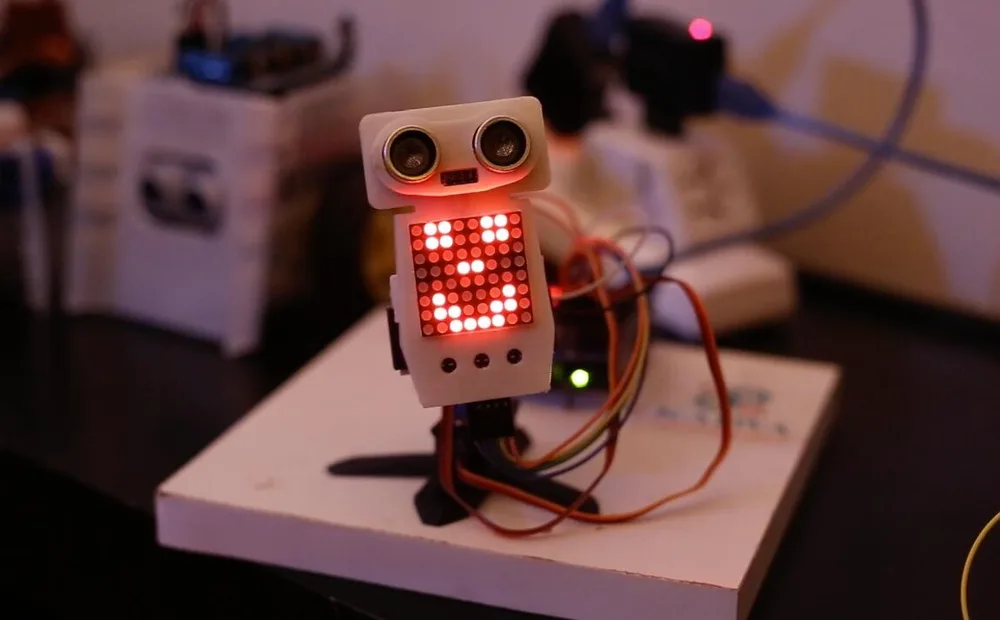
While actively participating in my university's robotics club, I spotted a clear gap: there were no local suppliers of robotics components or educational kits in Quilmes. Local makers depended on slow, expensive imports or had to travel to Buenos Aires for parts.
The hypothesis was straightforward: if an active community of makers, students and teachers existed but lacked access to components, someone who could put the right parts in their hands, with real guidance, could build a business around that.
We focused on the Arduino platform as the backbone of our catalog: shields, sensors and modules covering different skill levels and goals. We were not just a shop: we offered personalized advice to make sure every customer actually finished their project, backed by after-sales support that kept them moving forward when they got stuck.
We developed and sold 4 robotics kits and 7 educational kits, each designed for a different level and purpose. We also launched our own courses to close the loop between the hardware and the knowledge.
We participated as sponsors and competitors in two consecutive editions of the Bahía Blanca Robotics Competition (the largest robotics competition in Argentina). A signal that the brand was starting to carry weight in the community.
In the final phase, we established strategic partnerships with Educabot and Intel. Together we delivered training programs for government ministries, provinces and educational institutions, cementing our focus on spreading robotics and STEAM education.
Among the groups that trained with us were students from a private school in Quilmes. That direct classroom experience (seeing how the kids learned, what worked and what didn't) became the seed of Ultrabot: an educational robotics academy designed specifically for private schools in the area and the first concrete spin-off of the Kaiwa model.
We tried more than once to import directly from China to improve our margins, but it proved very difficult. Argentina was going through a period of severe dollar scarcity with strict import restrictions, making each shipment slow, expensive and uncertain.
The result: thin margins and a constant dependence on whatever importers and resellers in Buenos Aires had available. Without real control over inventory, stable growth was hard to achieve.
Our best results came when we fully pivoted to services: courses, training programs, mentoring, and one-on-one guidance for teachers and other entrepreneurs. In that phase, product sales stopped being the focus and became a "convenience" for the people who came to learn from us.
That taught us something fundamental: the real value was in the knowledge, not the hardware. And that conviction shaped everything that came next.
Kaiwa-Tech was born during my university years, while I was part of the campus robotics club. The model was shop plus academy: we supplied the components the local community needed and supported them with courses so they could actually do something useful with them.
The focus was on the Arduino platform, which was just starting to scale in Argentina at the time. We designed our own kits calibrated for different levels: from someone who had never touched a microcontroller to competitive robotics projects.
- Arduino Uno / Nano
- Custom shields
- Sensors & modules
- Robotics kits (×4)
- Educational kits (×7)
- 3D Printing
- Arduino basics and advanced
- Home automation with Arduino
- Robotics with Arduino
- 3D design and printing
- Basic electronics
Collaborations with Educabot and Intel let us go beyond the local market and deliver robotics and STEAM training to government ministries, provinces and educational institutions across Argentina. The first time I scaled a project beyond Quilmes.
We also competed in the Bahía Blanca Robotics Competition (the largest in Argentina) across two consecutive editions, both as sponsors and as competitors.